Short answer: The most common fakes are copies of Morgan dollars, Trade dollars, gold coins and California fractional gold. Wrong weight, wrong size, soft or mushy details and odd color are the usual giveaways. Proper testing of weight, dimensions and metal is the only reliable check.
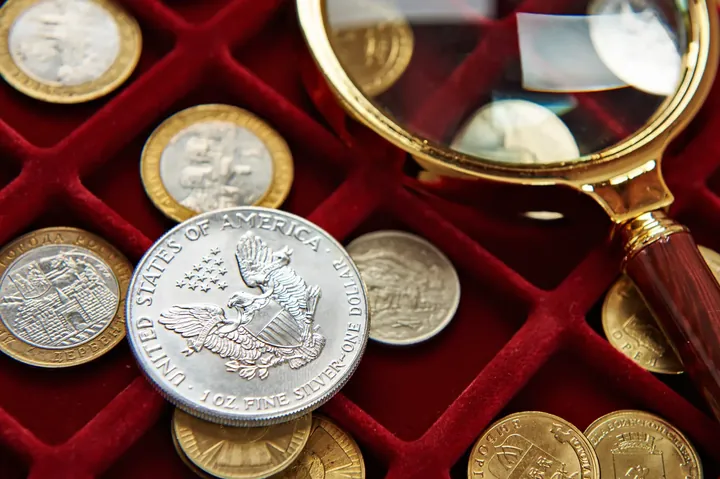
The fakes we see most
Counterfeits come in waves, and some types turn up again and again.
- Morgan and Trade dollars made of base metal
- Gold coins, especially small dollars and quarter eagles
- California fractional gold and bear tokens
- Altered dates, like a 1944-D cent tooled to look like 1914-D
- Added mint marks on common coins
- Fake grading holders
Simple warning signs
A coin that weighs too little or too much, measures wrong, looks greasy or soft, rings dull when tapped or has a strange color deserves suspicion. Silver dollars that stick to a magnet are fake. None of these tests is proof on its own.
How proper testing works
We weigh every questionable coin on a precise scale, measure its diameter and thickness, compare the details with known genuine examples under magnification and test the metal without harming the coin. If a coin fails, we explain what we found and give it back.
Fake grading holders
Counterfeit PCGS and NGC holders exist. We check the holder's construction and look up the certification number in the grading company's database. A real number with the wrong coin inside is a red flag.
More questions
- Can I test silver with a magnet?
- Silver is not magnetic, so a coin that sticks is fake. A coin that does not stick still needs testing.
- Will you buy a coin you think is fake?
- No. We explain what we found and return it.
Thinking of selling? Read about free coin appraisals, or send the form below.
Ask for a free offer